Why We Begin Practice With Reflection (And Why It Matters More in Midlife)
The Small Pause at the Beginning
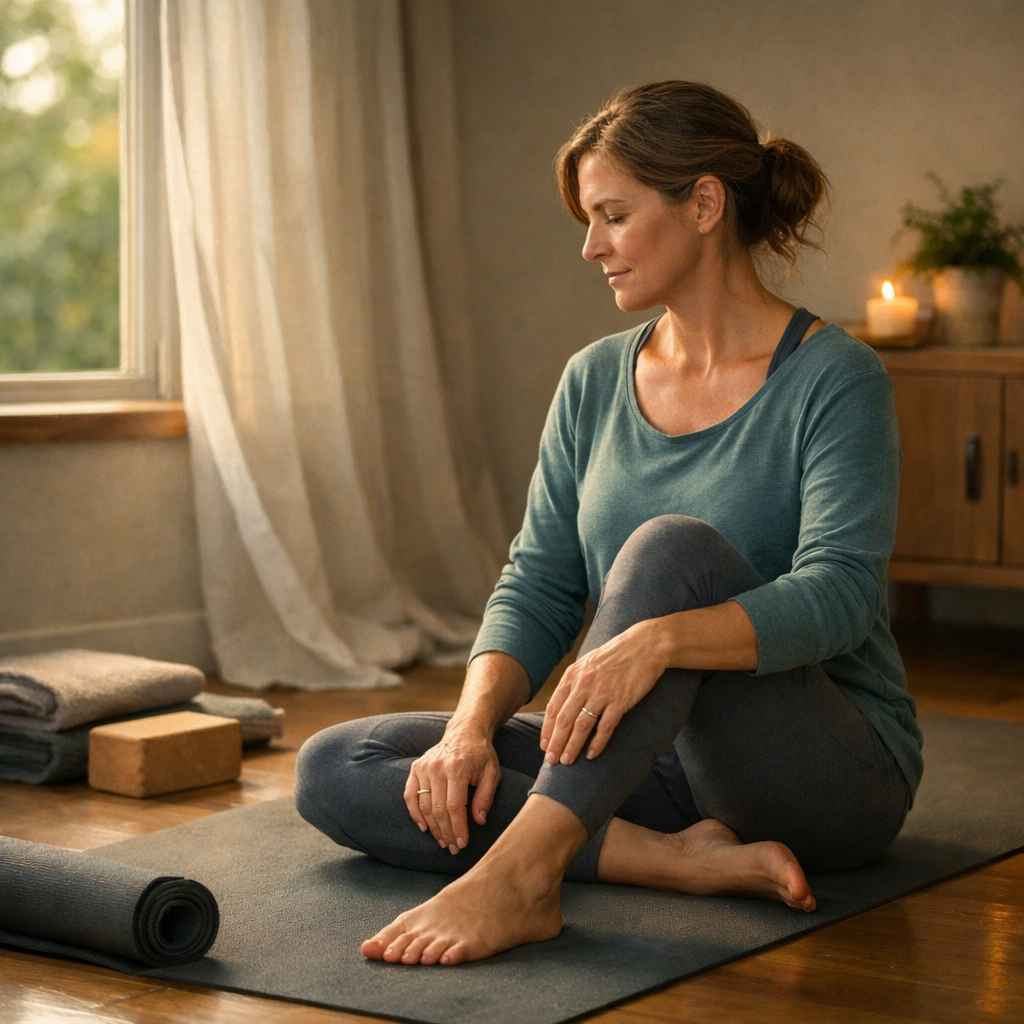
At the start of every yoga practice, we pause.
Nothing dramatic happens in that moment. There’s no deep stretch, no strength work, no complicated technique. We simply take a minute to notice how we are arriving.
For many women, this is unfamiliar. The instinct is usually to begin immediately. The day has been busy, time is limited, and exercise becomes another task to move through efficiently.
But skipping the moment of reflection often means we start training without recognising the state the body is already in.
That matters more than most people realise.
Reflection Is Not Replaying Your Day
When we talk about reflection at the beginning of practice, it isn’t a mental replay of events.
It’s not about analysing the conversation you had at work or the long list of things still waiting for you later in the evening.
Instead, the reflection is physical and observational.
You’re noticing the effect the day has had on your body.
Perhaps your breathing has become shallow after hours of concentration. Your shoulders may be slightly lifted. Your jaw might be holding tension. Your hips could feel stiff from sitting.
These are small signals, but they tell you a lot about how your nervous system and body are currently operating.
The Nervous System Sets the Tone for Training
In strength training, mobility work, or yoga, the body’s response to exercise is heavily influenced by the nervous system.
If the nervous system is already in a heightened state from a demanding day, jumping straight into intense movement can feel disproportionately difficult.
You might notice:
coordination feels off
strength feels lower than expected
breathing becomes strained more quickly
movements feel tight or restricted
This doesn’t necessarily mean you’ve lost fitness or strength. Often it simply means the body hasn’t transitioned out of the stress state created by the day.
A short reflective pause helps shift that state.
Breathing slows slightly. Muscles release small amounts of tension. Attention moves from external demands back into the body.
Only then does movement begin.
Why This Matters More in Midlife
For women in their late thirties and early forties, the relationship between stress, recovery, and training often becomes more noticeable.
Hormonal fluctuations, sleep disruption, work demands, and caregiving responsibilities all influence how the nervous system regulates stress.
Research in this area is still developing, especially for women in perimenopause, but several patterns are commonly observed:
Recovery capacity can fluctuate more from week to week.
Sleep quality becomes a stronger determinant of training readiness.
Stress hormones can remain elevated longer after demanding days.
When these factors accumulate, the body benefits from clearer signals that it is safe to shift from “day mode” into movement and recovery.
Reflection provides that signal.
The Psychological Layer: Permission to Notice
There is also a psychological element to this practice.
Many women in midlife have spent decades prioritising the needs of others. Work responsibilities, family logistics, and constant decision-making often take precedence over noticing their own physical state.
Exercise then becomes one more thing to accomplish efficiently.
Reflection interrupts that pattern.
It creates a small but meaningful moment where attention returns to the body without judgement or pressure.
Over time this builds something important: self-trust.
Instead of forcing every session to look identical, women begin adjusting based on real feedback from their body.
Ironically, this flexibility often leads to greater consistency.